GLOSSARY of VOIP

Are you thinking about using VOIP technology for your business?  If so the first thing to do is understand what it is and what it comprises of, which is where a VOIP glossary will help.

First VOIP stands for Voice over IP or Voice over Internet Protocol.  This technology is a reference to using the Internet as a means of making phone calls.  While there are many advantages to using VOIP, the primary one is that the connections are cost effective.  You can call customers or other personnel anywhere in the world and pay local charges.  With VOIP telephony the traditional phone system is threatened.  Although there are many outstanding service providers that support VOIP, the two leaders include Cisco and VocalTec.

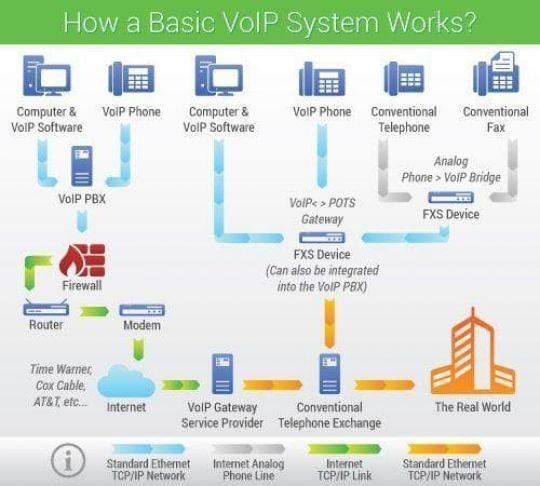
To use as a reference, consider the following information for your VOIP glossary.  For example VOIP is a way in which voice data is managed.  Instead of going over a PSTN, the VOIP technology sends voice in packets of traffic.  The advantage is that you will save significant money on toll charges that are billed from standard phone companies.

The main protocol that is being pushed now is called ITU-T H.323, which is the standard way in which voice and video are sent over the Internet and within an intranet using IP.  Additionally Real Time Protocol (RTP) is used to ensure the packets of voice are delivered in a timely fashion.  As you will see from the information below, there are many things to learn about VOIP but this VOIP glossary will help you understand and choose the right service for your business.

•    Connection versus Packet Oriented – With a connection-oriented network, data and voice are transferred using a switching element in the network.  Because the connection is dedicated to this transfer whether all of it is used or not, significant bandwidth goes to waste.  With a packet-oriented network, data (whether data or voice) is sent in packets only when needed.  This provides extreme efficiency and saves you money.
•    H.323 – This ITU standard is used for multimedia.  With a packet-oriented network, interoperability between the various vendors is guaranteed and efficient.  The H.323 is the infrastructure and utilization of different speech coders and signaling stacks.
•    H.450 – This series of standards defines the functionality and distribution that occurs in the H.323 infrastructure.  Also known as supplementary services, they work to extend the basic services of H.323 helping to establish and release a connection.
•    Jitter – This variance of latency in a connection is what a Jitter is but there is a drawback in that connection-oriented systems or audio devices that need a continuous stream of data, the Jitter buffer must collect the packets prior to sending them on to the devices or lines.  This problem can be corrected by increasing the size of the buffer but there is a risk of latency of a connection.
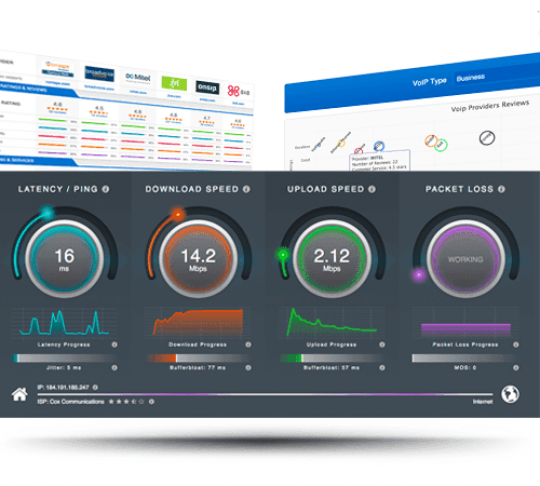
•    Latency – This is the delay or amount of time that occurs between the voice, as it is digitalized at the sender’s location and the output located at the receiver’s end.  Latency is influenced by three things: the distance in which data must travel, the size of the packet and the number/time of network elements that exists between the terminals.
•    LPCP – This refers to Lightweight Phone Control Protocol and is the standard that is used to control phones in a pragmatic and simplistic manner.
•    Megaco / H.248 – This is also known as a media gateway similar to LPCP though more complex.
•    QOS – This stands for Quality of Service and relates to the quality of a connection.
•    RTP – Meaning Realtime Transport Protocol is a reference to the information that is transferred by a sender with a real time stamp.  When the recipient examines the timestamp he or she can sort the packets in order.
•    RTCP – Realtime Transport Control Protocol gives applications a status of the quality of a specific network.
•    RSVP – This stands for Resource Reservation Protocol and is what makes it possible for bandwidth to be reserved in a non-terminal network, i.e., router.
•    SIP – This translates to Session Initiation Protocol and offers the advantage in that it is easy to implement, debug and integrate application.  Although SIP is newer than H.323, it does not standardize very many of the supplementary services.
•    TOS – Type of Service specifies the packet’s priority.

Using this glossary VOIP, you will now be able to make educated choices rather than just guessing.

If you would like to search for VOIP services click here [url=voipreview.org/area.all.aspx]VOIP services[/url].

Submitted by jvanbrug001 on Wed, 01/13/2010 - 23:40

Last Updated: 02/10/2012 10:02 AM