





What is Business VoIP?
Business VoIP, also known as Business Voice over Internet Protocol, is a phone system designed to match your business calling needs.
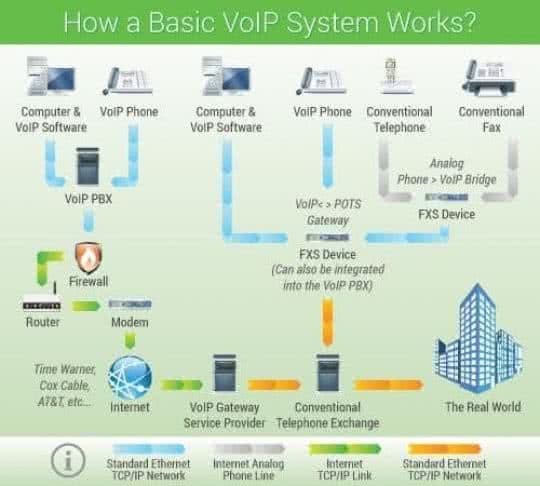
VoIP for business uses your high-speed Internet connection to make and receive phone calls, offering businesses of any size the features and flexibility that they require to effectively manage their employees and customers.
Service options are available for both business and residential use. However, there is a major difference between the two: business calling plans have more of a focus on tools and enterprise features that businesses need to succeed, while residential calling plans have basic features and standard inbound/outbound calling.
Business VoIP is a way to make business calls via your broadband Internet connection instead of using traditional phone lines. Choosing a service plan is much more than just replacing a traditional phone line, though. These phone solutions include a PBX phone system along with advanced productivity and call management features.
While PBX phone systems and advanced productivity features are often considered add-ons with traditional phone companies, they are included with service. Furthermore, most of these providers also offer you the flexibility and mobility that a traditional phone company simply can't provide. Do yourself a favor and compare these different business phone service providers with your current phone service provider to see how they match up.